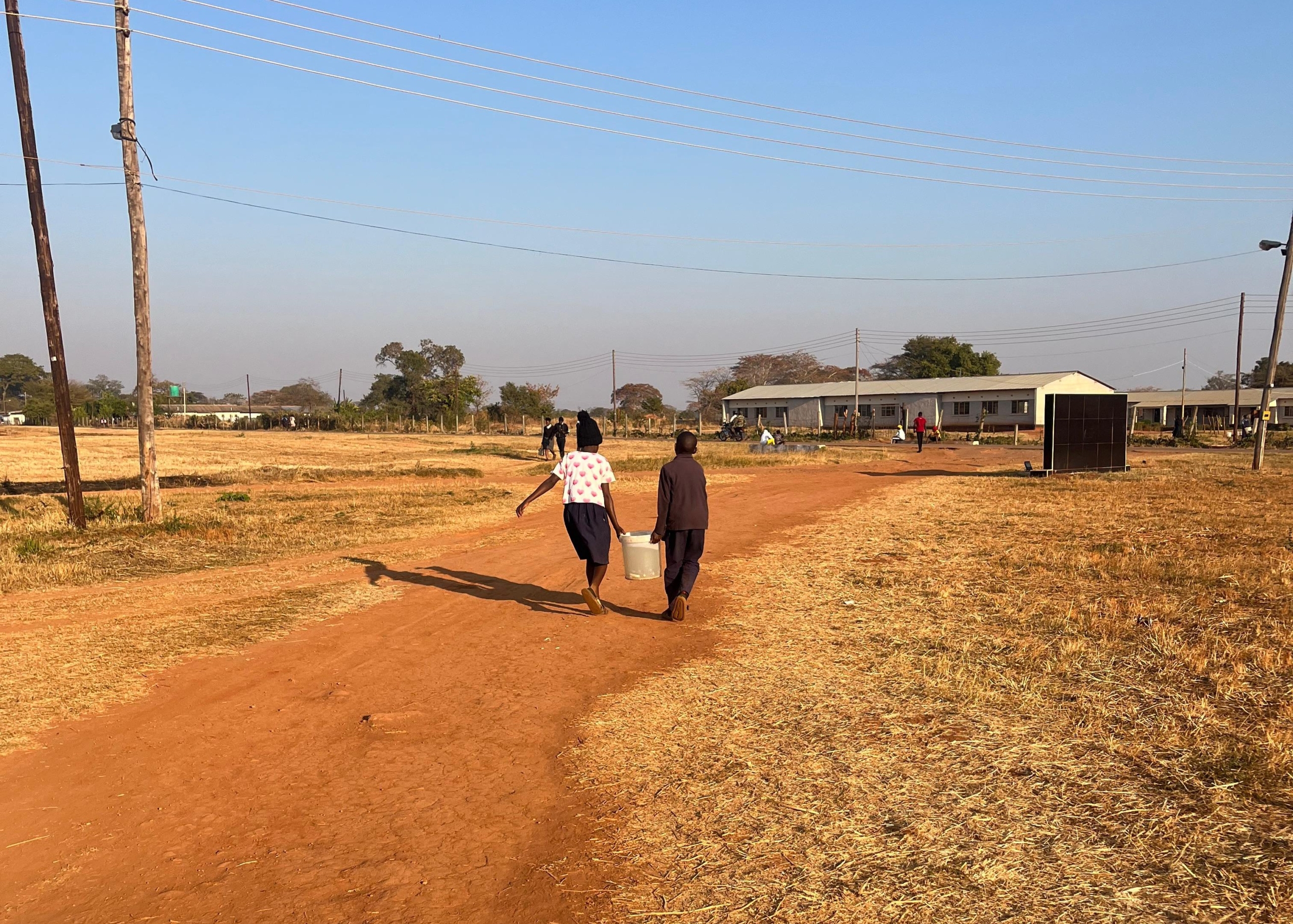
LUSAKA, Zambia, December 22, 2025 — In 2023, an estimated 447 million children lacked access to basic drinking water in schools. Africa remains the only region where fewer than half of all schools provide basic drinking water services. The resulting impacts on education, health, and human development are severe but preventable. In many cases, teachers lack the resources, training, and time needed to manage drinking water supplies effectively.
In response to this challenge, the Government of the Republic of Zambia has piloted a Results-Based Contract (RBC) to ensure reliable drinking water in 100 government schools and health clinics in Mumbwa District, Central Province. Under this model, a professional service provider is contracted and paid only after delivering independently verified results of reliable drinking water.
The initiative follows a 2024 Memorandum of Understanding with Uptime Global, signed by the Ministry of Local Government and Rural Development, Ministry of Education, Ministry of Health, and the Ministry of Water Development and Sanitation, affirming a shared commitment to implement this district-level pilot.
The SafeManzi pilot, supported by Uptime Global in collaboration with the University of Oxford, has delivered remarkable outcomes. Approximately 70,000 pupils and patients now have access to reliable drinking water every day. System breakdowns are repaired within 72 hours, routine water safety testing is conducted, and bacteriological contamination has been significantly reduced. Importantly, the model delivers results at a cost of just USD 1 per person per year, or USD 400 per institution.
Building on this progress, Uptime Global, through financial support from The Leona M. and Harry B. Helmsley Charitable Trust and the Grundfos Foundation, is working with the Government to co-develop a results-based contracting model that will extend reliable drinking water services to 1,500 schools and clinics in Central Province. The SafeManzi model will provide a framework for scaling results-based contracts to more than 10,000 rural schools and clinics nationwide, ultimately benefiting over 3 million learners and patients. The model also presents an opportunity for other African countries to adapt the approach, as two in five school children across the continent still lack access to basic drinking water.
Government and Partner Remarks
Hon. Eng. Collins Nzovu, Minister of Water, Sanitation and Development, stated:
“The President has mandated the delivery of safe drinking water to all public facilities in Zambia. The Ministry is committed to fulfilling this mandate and is encouraged by the strong results of the SafeManzi model, which demonstrate how this national goal can be achieved. We recognize that investments in water infrastructure must be matched with long-term support for maintenance. This approach is economically sound and strengthens resilience against growing climate threats affecting rural communities.”
Dr. Gabriel Pollen, Permanent Secretary, Ministry of Local Government and Rural Development, added:
“Results-based funding is an innovative and cost-effective approach to ensuring reliable drinking water in rural schools and clinics. Local Government will play a pivotal role in coordinating implementation through our Provincial and District Offices, particularly as water security challenges intensify. The SafeManzi model enhances accountability and transparency in public spending, in line with the Ministry’s principles of good governance.”
Dr. Duncan McNicholl, CEO of Uptime Global, remarked:
“Uptime Global has pioneered results-based funding for reliable drinking water in 16 countries since 2020, benefiting five million people daily in 2024. Zambia presents a unique opportunity to scale this model to help achieve the government’s 2030 commitments for SDG 6.1. Working closely with government partners and a Zambian service provider (ECHO), we have made strong progress. The new funding support provides a foundation to co-develop a financially sustainable model for national scale.”
Professor Rob Hope, Smith School of Enterprise and the Environment, University of Oxford, noted:
“The scale of the drinking water challenge in Africa is immense and persistent. Without sustained government leadership, well -intentioned but short-lived projects will continue to waste public and donor resources by building, but not maintaining, water systems. Results-based funding provides Zambia with a sustainable, cost- effective way to allocate public funds for equitable and lasting outcomes. It is an ambitious but achievable goal for every rural school and clinic in Zambia to have reliable drinking water by 2030.”
Walter Panzirer, a Trustee of the Helmsley Charitable Trust, said:
“Access to safe drinking water and health itself are inextricably linked, from basic hygiene and disease prevention to quality of healthcare. Recognizing this relationship, Uptime Global has brought this resource directly to the schools and clinics that need it most with an accountable, results-based contract model. Key to the success of the SafeManzi pilot was the collaboration and involvement of local communities and governments, and Helmsley is committed to supporting these efforts to scale the model throughout Zambia’s Central Province so that children and patients can have the best possible outcomes.”
Contact
Chilala Haankuku, chilala@uptimeglobal.org
M: +260768823537
About The Leona M. and Harry B. Helmsley Charitable Trust
The Leona M. and Harry B. Helmsley Charitable Trust aspires to improve lives by supporting exceptional efforts in the U.S. and around the world in health and select place-based initiatives. Since beginning active grantmaking in 2008, Helmsley has granted more than $4.6 billion for a wide range of charitable purposes. For more information on Helmsley and its programs, visit helmsleytrust.org.
About the Grundfos Foundation (Poul Due Jensen Foundation)
The Grundfos Foundation is a Danish commercial foundation holding 88% of shares in Grundfos, a global leader in pumps and water solutions. The Foundation supports philanthropic causes across Water & Development, Research & Innovation, and Inclusion & Community Engagement. More information is available at www.pdjf.dk/en
More information on SafeManzi programme