Digestive Disease Week 2026 convened clinicians, researchers, and industry partners with the aim of accelerating the translation of new evidence into clinical practice, featuring key insights into inflammatory bowel disease (IBD). The meeting was held in Chicago, Illinois from May 2-5th, 2026 and Helmsley’s Crohn’s Disease Team was on hand to connect with grantees and other leaders in IBD. Check out some reflections below:
The importance of listening to and working with people with Crohn’s disease in designing new treatments strategies.
Crohn’s has significant impact on day-to-day life and can be incredibly isolating — we must ensure that research and design in clinical practice always consider the needs and preferences of people living with the disease first. Further, several presentations focused on making treatment decisions in collaboration with patients, and the need for dietary and psychosocial support in addition to biological therapies and surgeries, to more holistically address the challenges facing people with Crohn’s disease.
Advances in the development of validated and universal standards for clinical trials.
Complications of Crohn’s disease like intestinal stricture and perianal fistulas need new treatment options. Many presentations cited the work of the Helmsley-supported STAR and TOpClass Consortia, which are generating reliable measurement and consistent description of intestinal strictures and perianal fistulas, respectively. The work of these groups is paving the way for the development of new medicines that can address these often debilitating complications of Crohn’s disease.
Using the best therapy available as soon as possible.
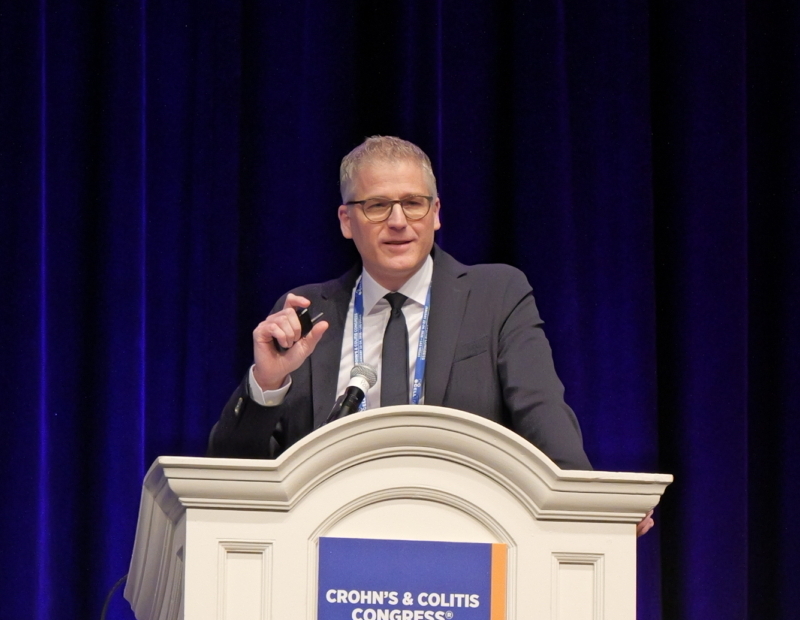
Several talks highlighted lessons from the PROFILE Study and other studies, including a session led by Marla C. Dubinsky, MD, chief of Pediatric Gastroenterology and Nutrition at Mount Sinai Kravis Children’s Hospital. She and others argued for starting advanced therapies early on in Crohn’s disease, as this is associated with better treatment outcomes. This contrasts with earlier “step up” models of care, that held that treatment should be escalated to more advanced therapies only as disease progresses and other less effective treatments fail due to potential concerns around safety. With safety better established and evidence showing it’s better overall to start treatment early, the field is changing to recommend starting advanced therapies earlier.
The need for new therapies, earlier diagnosis, combination strategies, and disease prevention is still clear, as even a “top down” approach does not serve all patients and advanced treatments also fail. That’s why at Helmsley, we’ll continue to support innovative research to push the field forward.
We also extend our congratulations to researchers supported by Helmsley funding who received recognition for their contributions to the field:
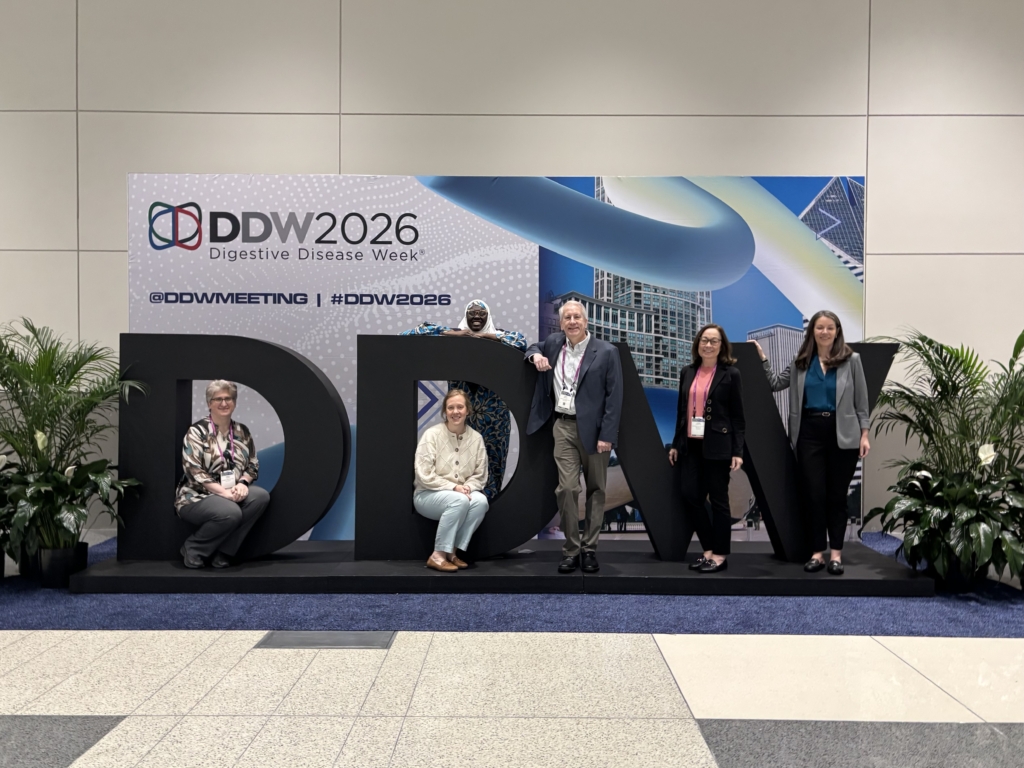
Members of Helmsley’s Crohn’s Disease Team at DDW2026
We always appreciate the energizing opportunity to connect with others at DDW who share our goal of working toward a cure for Crohn’s disease and improving lives.