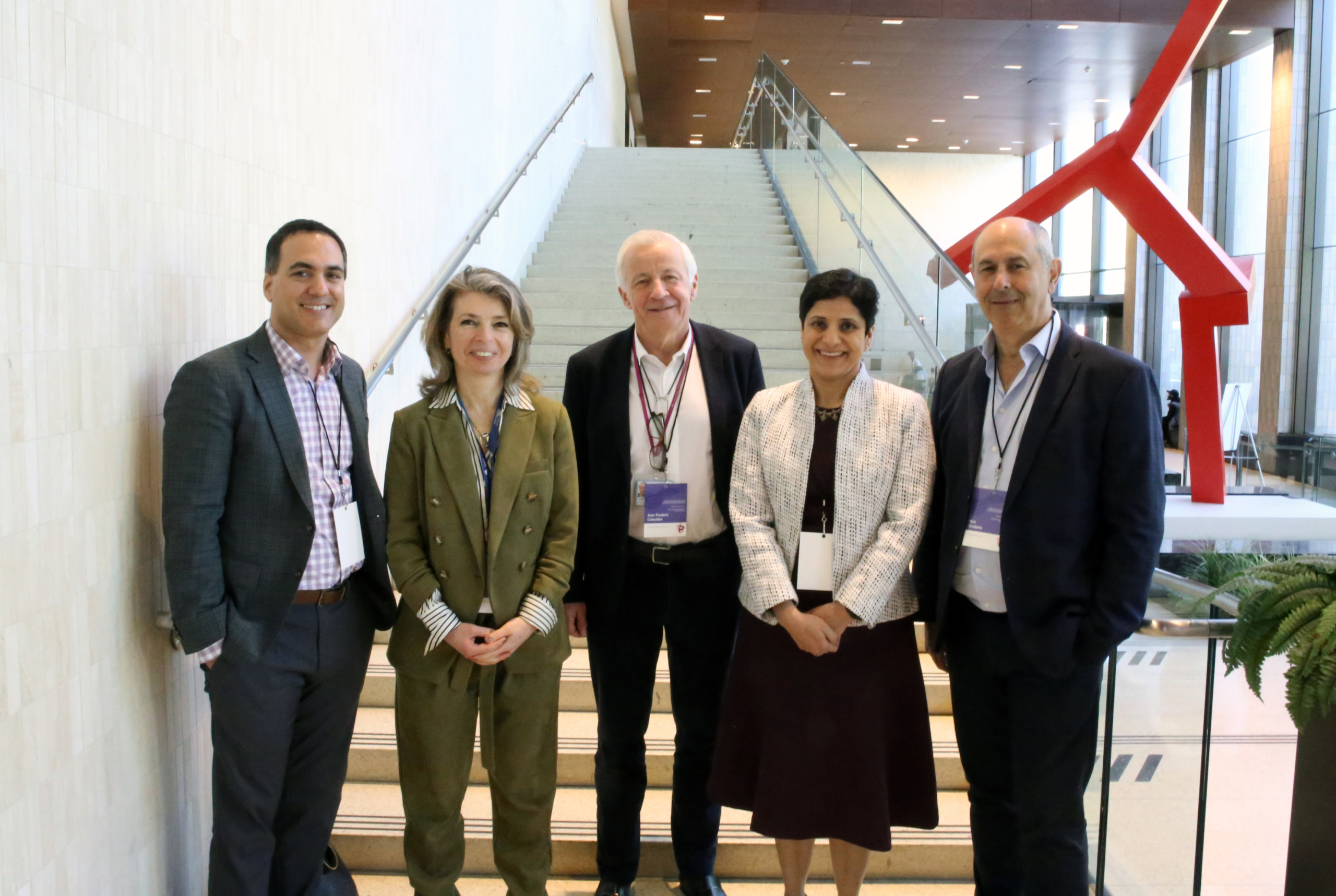
We interviewed Scott B. Snapper, M.D., Ph.D., the Chief in the Division of Gastroenterology and Wolpow Family Chair and Director of Inflammatory Bowel Disease Center at Boston Children’s Hospital, and the Egan Family Foundation Professor of Pediatrics in the Field of Transitional Medicine and Professor of Medicine at Harvard Medical School, who is one of the principal leaders of the Very Early Onset Inflammatory Bowel Disease (VEO-IBD) Consortium. The Consortium — supported in part by Helmsley — unites leading pediatric gastroenterologists and scientists from top academic centers worldwide to uncover the genetic and immunological causes of VEO-IBD, a rare and often severe form of IBD that typically presents before age 6 and frequently does not respond to conventional therapies and surgery. The ultimate goal is to translate these discoveries into targeted, effective treatments for affected children and for others with IBD.
Could you tell us a bit about the VEO-IBD consortium, how it started, and how it’s unique in the IBD research field?
The VEO-IBD Consortium began with a simple but powerful observation: when inflammatory bowel disease strikes very young children, it is very aggressive and in many cases has a clear underlying genetic cause. Studying these extreme, early-onset forms, we believed, could unlock new understanding of biology and lead to precise, life-changing therapies for children who fail every standard treatment, and potentially for others with IBD as well.
The story really started over informal conversations with two longtime collaborators and now co-leaders of the Consortium — Christoph Klein in Munich and Aleixo Muise in Toronto — while we were hunting for new IBD genes. In parallel, a remarkable private donor whose two children live with VEO-IBD approached me with a bold vision to transform the field, and he was willing and able to help make it happen.
I met with the Helmsley Crohn’s Disease Program Director, whose advice was clear: identify and bring together the absolute best researchers in the world, figure out what needs to be done, and Helmsley would fund the convening.
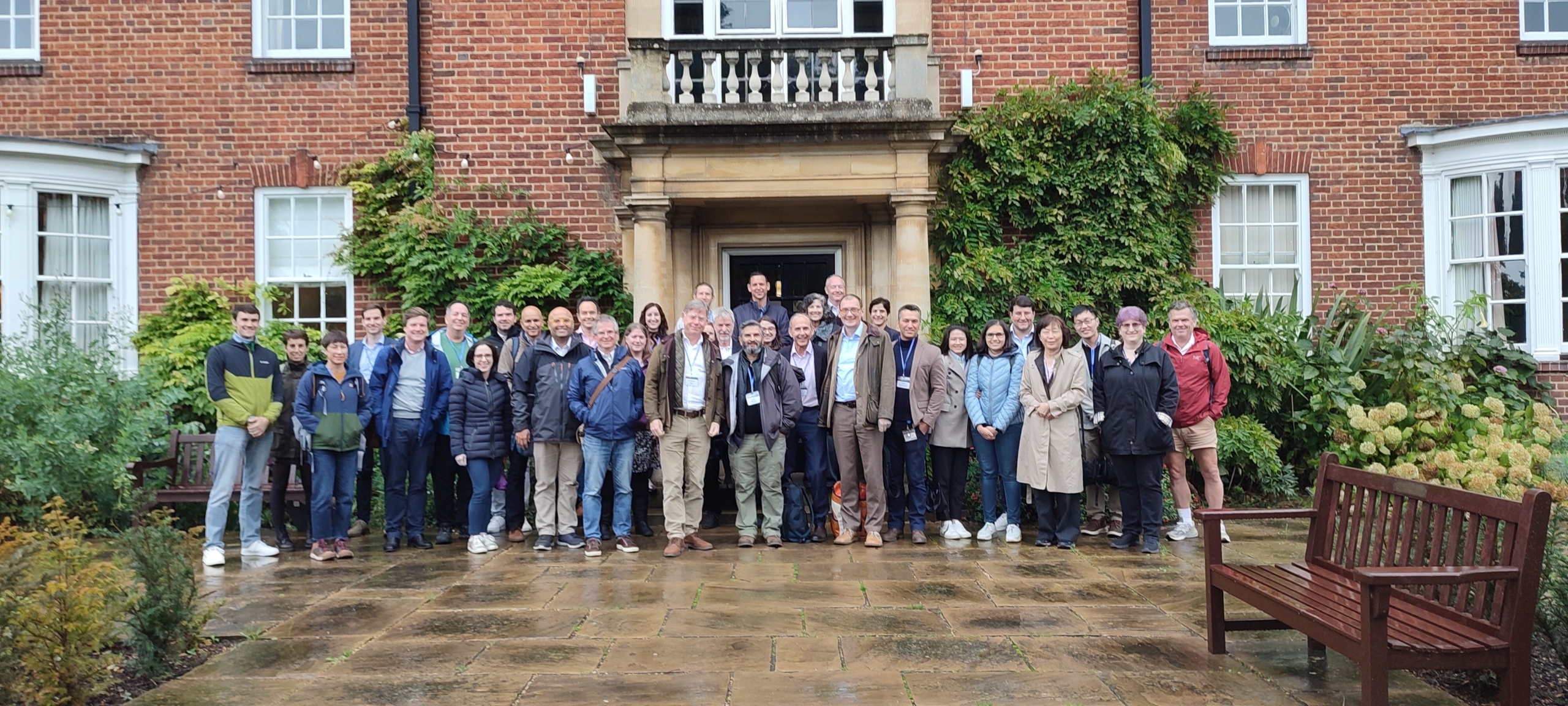
In 2013 we convened an extraordinary group in Amsterdam — clinicians, geneticists, immunologists — for an intense two-day meeting. It was this incredible intellectual tour de force. There was such excitement because some people shared new causes of VEO-IBD that no one had previously known about. Over the next year we crafted a detailed scientific roadmap, which became the foundation for three successive major research funding cycles from Helmsley that continue today.
What makes the Consortium unique in the IBD landscape is its scale, longevity, and truly collaborative spirit. We built a large international group that collaborates with hundreds of centers, all focused on why very young children get IBD while coming up with new therapies. Many who were at the initial meeting 12 years ago are still deeply involved now.
What do we know about VEO-IBD?
In Crohn’s disease or ulcerative colitis — as in type 1 diabetes, lupus, and most complex immune diseases — the inheritance is polygenic: many low-impact genetic variants each nudge risk slightly. In IBD, large genome-wide studies comparing tens of thousands of patients with healthy controls have identified more than 300 common genetic variants that influence risk. Individually, each variant has only a tiny effect — perhaps increasing what is a very low risk by 10–50%, so that your overall risk is still usually very low — and nearly everyone in the population carries some variants that increase risk. Disease emerges from the combined, subtle contribution of many genes plus environmental triggers.
Monogenic forms of VEO-IBD are fundamentally different. These are caused by rare mutations in single genes that are truly disease-driving. While penetrance can vary (meaning not every child with the mutation will necessarily develop IBD), in many cases the likelihood that if you carry this mutation, you will develop IBD, exceeds 50%, and can approach 100%. Carrying such a mutation doesn’t just raise risk — it explains the disease and often points directly to a rational, targeted therapy (e.g., hematopoietic stem-cell transplantation, cytokine blockade, or small-molecule inhibitors tailored to the defective pathway). That direct gene-to-therapy link is what makes the monogenic subset so powerful. About 10–15% of these cases are driven by rare single-gene (monogenic) mutations that are truly causal, not just risk factors.
Our Consortium has identified more than 15 monogenic causes of IBD, and for several of them we’ve already translated these discoveries into targeted therapies, including successful hematopoietic stem cell transplantation and novel small molecule or biologic treatments tailored to the exact genetic defect. Understanding these rare diseases has not only given affected children new hope; it is also revealing fundamental mechanisms that apply to broader IBD and even other immune disorders. That combination of deep scientific discovery and rapid clinical translation for the sickest kids is what sets the VEO-IBD Consortium apart.

What kind of genes are you seeing mutations in?
Interestingly, many of the mutations associated with IBD — and in some cases clearly causal for IBD — occur in genes that normally act to suppress the immune response. When these genes have mutations, the immune system becomes hyperactive.
Another major category of mutations affects the intestinal epithelial barrier. The intestine has a single layer of epithelial cells, and the immune cells sit underneath them. Mutations can impair the intestinal epithelial barrier, resulting in a “leaky gut”. This allows bacteria, microbial products, and dietary metabolites from the gut lumen (the inner space of the gut) to pass through the epithelial barrier, where they can abnormally activate the immune system.
A third group of genes is involved in protecting against microbes. There are more bacteria in the intestine than there are human cells in the body, and when genes responsible for managing these microbes are impaired, the result can be intestinal inflammation and IBD.
The extraordinary part is we have not only identified the genes responsible for disease in subsets of these patients, but we’ve been able to develop new therapies based on these discoveries. These treatments show promise not only for the children that have these monogenic cases of IBD, but potentially for the broader IBD population as well.
Can you give us some examples?
One major breakthrough came from a study led by Christoph Klein and Bodo Grimbacher in Germany. They discovered that loss of IL-10 or the IL-10 receptor causes IBD, and they showed that hematopoietic stem cell transplantation can be curative. IL-10 is a cytokine that normally suppresses the immune response, and patients with these mutations also have an increased risk of developing B-cell lymphomas. This work was published in the New England Journal of Medicine quite some time ago.
Following that discovery, clinicians encountered IL-10 receptor-deficient patients who were too sick to undergo transplantation or had no suitable donor. Those cases will likely, unfortunately, be fatal without treatment. We determined that if you lack IL-10 signaling, you make a huge amount of a pro-inflammatory cytokine called IL-1. These are very small numbers of patients but we showed that if you block IL-1 in that subset of individuals, it could have therapeutic benefit. This finding prompted a broader question that we are still investigating: among patients with Crohn’s disease more generally, are there subsets of patients who resemble IL-10 receptor–deficient patients and show elevated IL-1? If so, they might benefit from the same therapy. We are currently developing biomarker tests to identify these potential candidates.
In another example, Aleixo Muise identified a mutation in a gene called TTC7A that affects both epithelial and immune cells and leads to a severely abnormal intestinal epithelium. Using genetic and drug screens, he searched for compounds capable of reversing this abnormal epithelial phenotype. He identified an existing drug called leflunomide that actually reversed the phenotype in experimental models and was subsequently tested in patients with TTC7 mutations.
What do you think some of the biggest unanswered questions are left in the field? And what gives you optimism looking forward?
One of the most optimistic aspects of studying these very young kids is the direct potential to help them. That in and of itself is unbelievable. That’s why I do what I do.
To give an example that illustrates this point, Lauren Collen, a junior faculty member in our group, identified seven out of 75 patients who had an abnormal activity of a transcription factor known as STAT3. These children had not responded to any available therapies. The severity of their disease is horrible — the first patient in this group that we studied had been hospitalized for two months, with 20 bowel movements a day since infancy. We studied those seven patients, and identified that they had markedly increased IL-12 and IL-23 signaling. Amazingly, when we treated four of these patients with an IL-23 blocker, all four, the only four that were tested, got better rapidly. Within a day or two of this therapy, that first hospitalized child experienced a dramatic turnaround, and got better.
Now here we are, five years later, and he asks his mom and dad, “do I still have IBD?”
He continues to receive IL-23 blockade, but we still don’t understand the mechanism of why these seven kids have this unique phenotype. Lauren is now pursuing one of the most exciting aspects of this work: do these seven patients have a distinct genetic signature? And if so, can we look in all IBD patients and identify those that have the same signature so that they are given the right therapy from the start? That is what’s the most unbelievable aspect of what we do.
Is there anything that has surprised you in your work? What is it about collaboration in this consortium that shapes the work?
At its core, the collaboration is what drives it. First and foremost, it’s trust, deep hard-earned trust — among the principal leaders, the 150 investigators, and hundreds of referring centers worldwide. Which only happens over time. We’re all doing this to make a difference — to advance the science, and above all, to help these children and their families.
I trained as an adult gastroenterologist, yet now I care for infants and young kids with VEO-IBD. There’s nothing quite like the bond you form with a family who has entrusted you with the most precious thing in their life. You walk with them through their hardest moments, and you get to carry a message of real hope: that an international team of scientists is collaborating together to help them. When we’re able to return to a family and say, “We found the gene, and here’s a treatment tailored to it,” the relief and gratitude in the room are indescribable. That moment — of turning discovery into genuine hope and often into life-changing therapy — is what keeps me wanting to do this every day.