Many people living with diabetes generate health information through continuous glucose monitoring systems, automated insulin delivery systems, and other connected devices. But data alone does not improve outcomes — to fully realize the benefits from this data, it needs to be interpreted, actionable, and incorporated into existing healthcare workflows.
 Remote patient monitoring, or RPM, is increasingly accepted as a clinical intervention that improves diabetes management. We envision a world where this means someone using diabetes technology has their device data seamlessly integrated into their clinical care. If their data indicates a need for intervention, there is a generally accepted workflow in place at the clinic for data review, patient outreach, escalation, and documentation that is sufficiently reimbursed.
Significant work remains to establish RPM as a sustainable, scalable model of care. To evaluate systems and outline a path forward, Helmsley convened the Remote Patient Monitoring in Diabetes Learning Exchange in the spring of 2026. Participants included several Helmsley grantees who have piloted Helmsley-supported RPM pilot projects.
Through this peer-learning environment, researchers and key opinion leaders discussed how their programs work, what they’ve learned, and how they’ve overcome common challenges. Together, they explored ways to improve the effectiveness, scalability, and sustainability of RPM programs.
Read the full meeting report here: Remote Patient Monitoring in Diabetes Learning Exchange
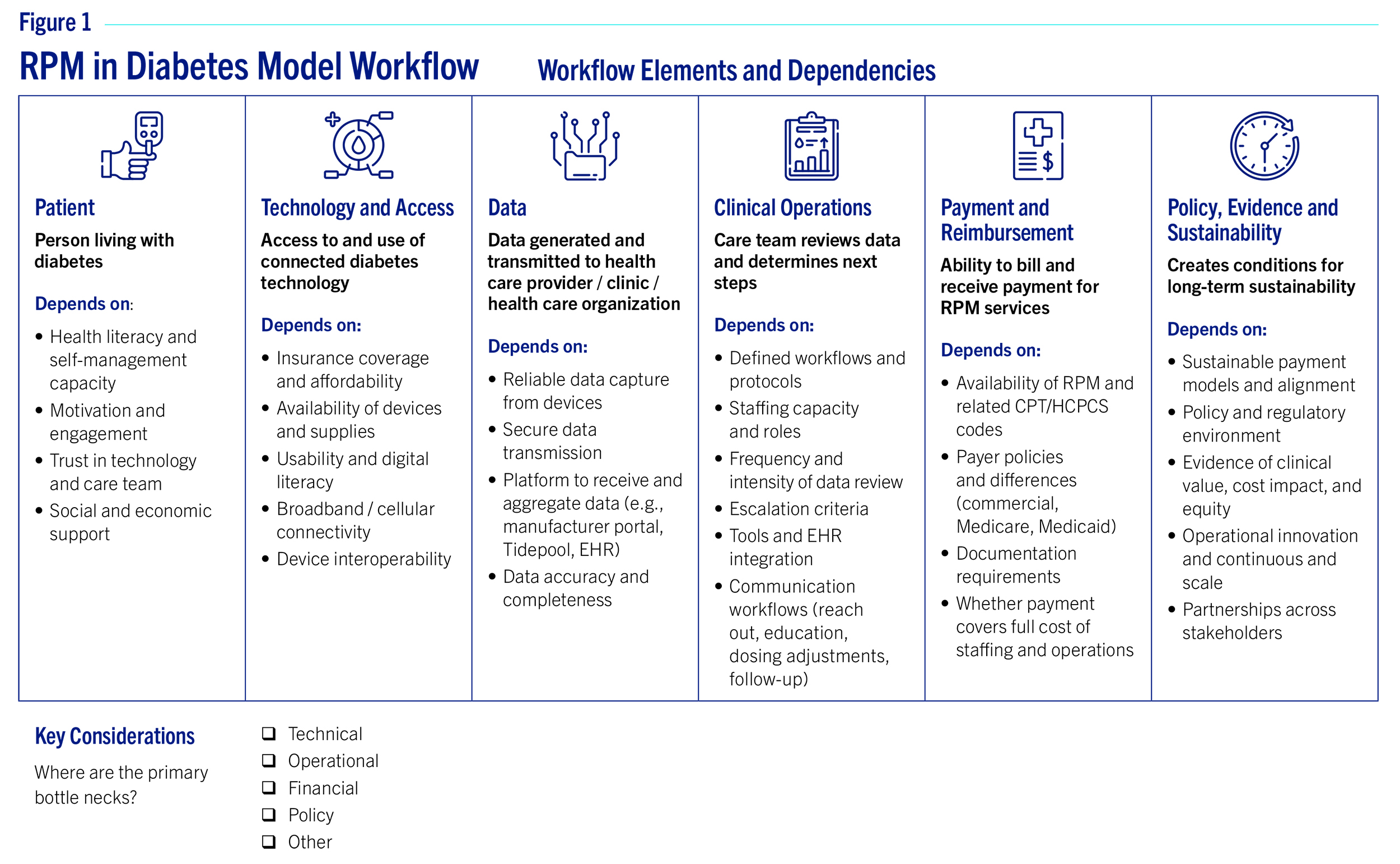
Figure 1. was developed using information that participants shared before the meeting about how they integrate remote patient monitoring into patient-centered diabetes care. Facilitators used the Model as a tool to represent the factors at play in implementing RPM and pressure test it with participants to help identify gaps, assumptions, and areas that need refinement. It comprises six interconnected domains that work together to translate patient-generated data into meaningful clinical actions and improved health outcomes.