Patricia “Patsy” Hudkins has watched the workplace video of her sudden cardiac arrest countless times, trying to find clues about what made that day different from any other shortly before her 39th birthday.
One moment, she was reaching to get something for a customer at Finish Line Burgers & Brew in Velva, N.D. The next, she was dropping to the floor, mid-sentence. “I was turned, so the back of my head hit the cooler and I slid down,” she said. “I went down laughing.” She doesn’t have her own memories for what followed, though she’s seen it play out. And she’s witnessed the longer-lasting effects that rippled through her family and her community.
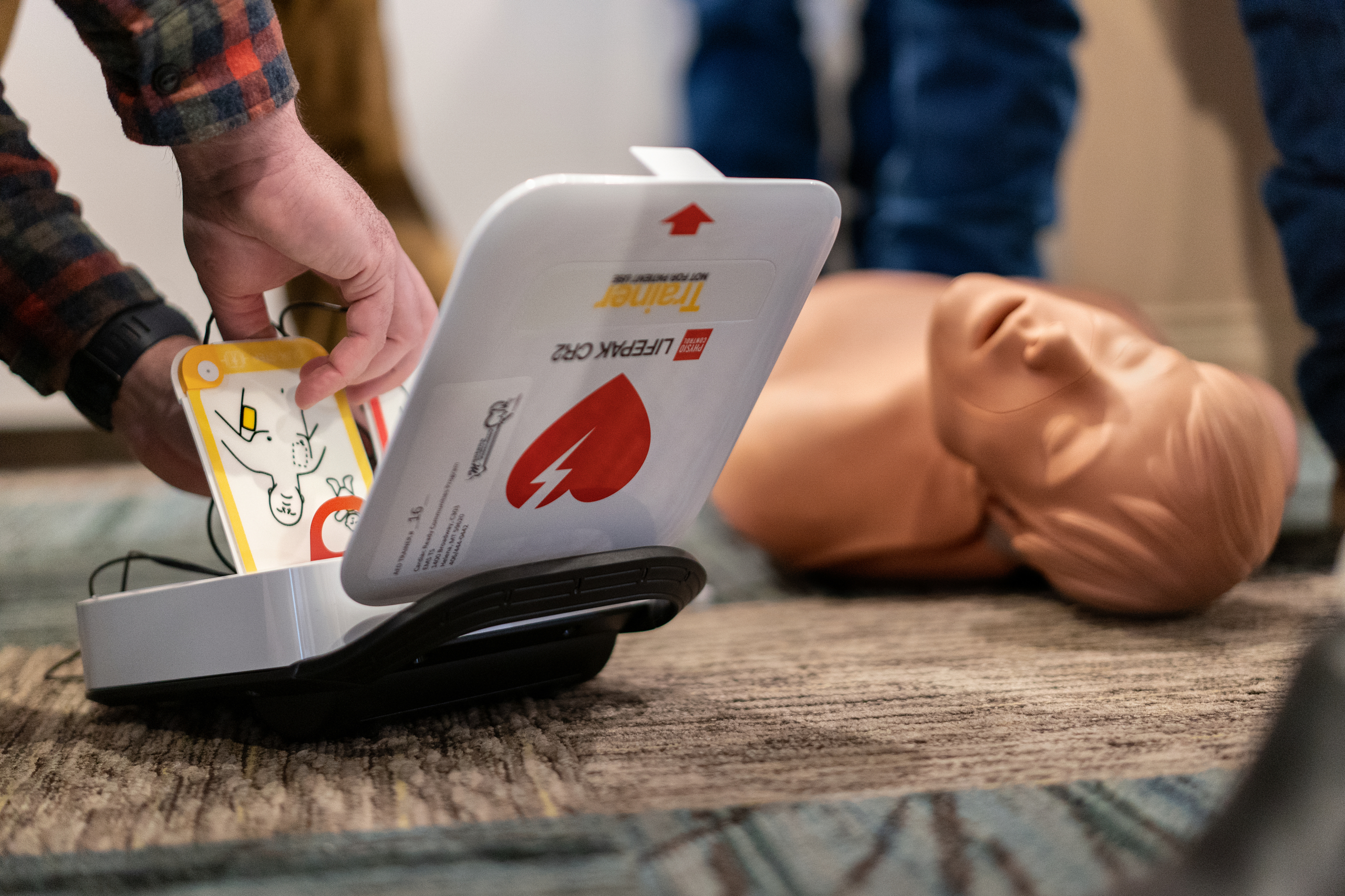
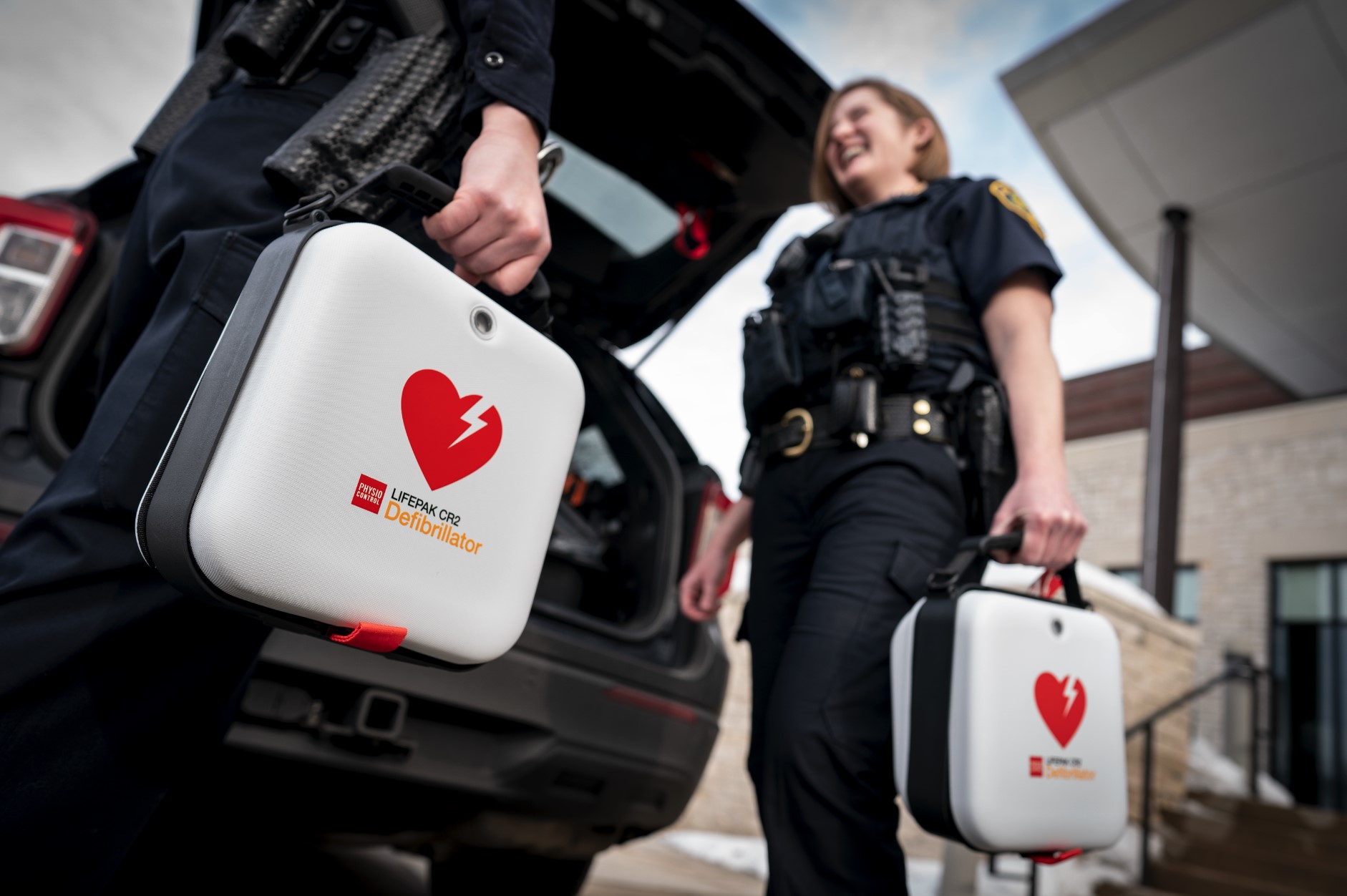
What happened in those first three to five minutes of missing time saved her life (watch the full video about Patsy’s story from North Dakota Health and Human Services). A bystander jumped over the counter and started CPR. Another called for help. McHenry County Sheriff’s Deputy Adam McTaggart arrived on scene with an automated external defibrillator, or AED. The device fits inside a small suitcase, but it delivers a calibrated electric shock strong enough to reset the heart back into a normal rhythm.
“My heart would’ve never started without that AED,” said Hudkins, whose three daughters call that day “the time mom died.”
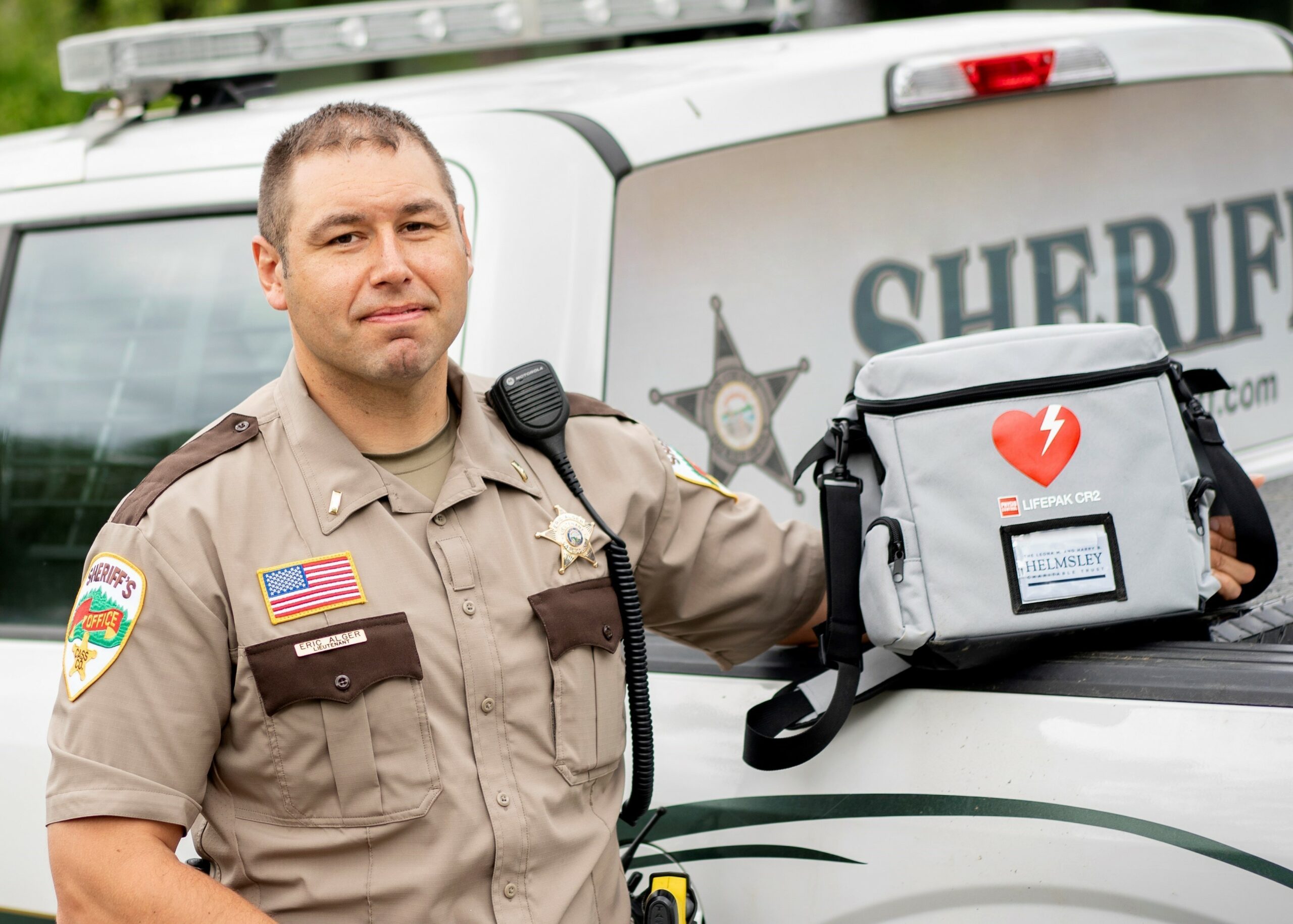
The AED in McTaggart’s squad car is one of 1,700 provided since 2021 to local, state, tribal, and federal agencies in his state through the North Dakota Law Enforcement AED Project. The program is funded by a $4.3 million grant from The Leona M. and Harry B. Helmsley Charitable Trust. It provides not only equipment but also training to effectively use the lightweight, modern devices. The first minutes after a cardiac event are crucial to restoring heart function and increasing chances of survival. In rural areas, law enforcement often are the first responders on the scene.
The project is credited with saving 90 lives since its inception. Earlier this month, North Dakota Health and Human Services celebrated that milestone with a message of hope at a news conference in Bismarck, N.D. Walter Panzirer, a Trustee of the Helmsley Charitable Trust, shared a recorded message. “I was pleased to have the opportunity to acknowledge and celebrate the heroic work of first responders and the lives saved in North Dakota through Helmsley’s Rural Healthcare Program initiative,” he said.
Hudkins’ friends and neighbors gathered to watch a livestream of the event at Finish Line, where she said she and her family got a second chance. In her town of a little more than 1,000 people, this one AED save inspired nearly two dozen community members to take CPR training. A group of Velva residents also secured additional money to equip 13 local businesses with their own devices. Hudkins’ eldest daughter, who was a high schooler when Hudkins survived the episode, chose healthcare as a career field and became a CNA, or certified nurse assistant.
Sherry Adams, North Dakota’s State Health Officer, called Hudkins’ story an amazing example of the lifesaving impact that individuals, organizations, and communities can have to address rural emergency needs. “The Helmsley Charitable Trust’s investment in the state has ensured that law enforcement responders have industry-leading AED equipment and the training needed to save lives and keep families whole,” she said.
The Bismarck celebration honored McTaggart, too. His swift action already had earned him an award from the North Dakota Fraternal Order of Police and recognition through the Hearts on Duty program. The latter enables law enforcement to pay it forward: The officer who used a Hemsley-funded AED can select another organization to receive an AED gifted by its manufacturer, Stryker.
“Truly my first thought was, I’m going to donate it to Finish Line. My sergeant said, ‘They got an AED the day she came back,’” McTaggart said. “It hit hard. And it still hits hard. … It easily could’ve gone many different ways without that AED there.”
Hudkins might not ever regain memories of her half-hour gap. Her focus is on taking full advantage of the time ahead of her. That includes completing emergency medical responder training so she can help others the way they took care of her.
“Everyone was in the right spot,” Hudkins said of her experience. “Your ambulance crew isn’t always sitting at the fire hall.”